The Work of Play: How Children Explore, Learn, and Grow
Play is essential to child development, providing the foundation for skills that support learning, regulation, and participation throughout life. As children grow, their play evolves, taking on different forms that each serve an important purpose.
In this post, we’ll explore the different types of play and share examples of toys and materials that often support each stage.
Please note: While these items are frequently designed and marketed for specific ages, play is not one-size-fits-all. Play looks different for every child, and fun doesn’t have an age limit! These items are meant to offer ideas and inspiration. Children engage with play materials in unique ways, and meaningful play can happen with everyday items, too.
Exploration
Children’s earliest play begins with sensory exploration of the world around them. By tasting, touching, listening, watching, and moving objects, children gather information about how their world works. They might grasp and release toys, mouth objects, explore textures, or bang two items together just to see what happens. Over time, this exploratory play becomes more intentional and complex.
Examples of toys that often support exploratory play include high-contrast images, rattles, gentle noise makers, teethers, fabric books with different textures, and baby-safe mirrors.


Functional Play
Functional play builds on early exploratory play and focuses on learning how objects work and how to use toys for their intended purpose. During this stage, children experiment with pushing, pulling, opening, closing, stacking, and activating toys, helping them understand object permanence, cause-and-effect relationships, and problem-solving skills. While functional play often emerges before age two, it continues to show up across childhood (and beyond!) as children practice and refine these foundational skills.
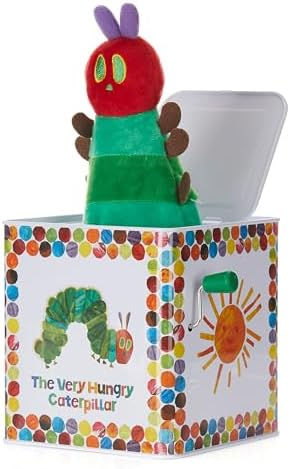
Examples of toys that often support functional play include cause-and-effect toys such as jack-in-the-box toys, blocks, and car ramps.


Symbolic Play
Symbolic play emerges as children begin to use objects and actions to represent real-life experiences. Early on, a child may first direct symbolic actions toward themselves, such as pretending to take a bite from a toy banana. Over time, these actions expand to include others - for example, pretending to feed a baby doll with a bottle. During symbolic play, objects are often used for their intended purpose (e.g. using a spoon while pretending to eat) to symbolize realistic actions.
Symbolic play plays a fundamental role in language development, as it helps children understand that one thing can represent another. As described by Westby (1980), “A word is not the object, but a representation of the object.” In the same way, symbolic play allows children to use objects and actions to stand in for real experiences, supporting early communication, flexible thinking, and meaning-making.
Symbolic play includes constructional play, in which children combine materials to create something new. Examples include stacking blocks to build and knock down structures or using play dough to make animals or other objects. Constructional play typically begins around age two and continues to develop across the lifespan.
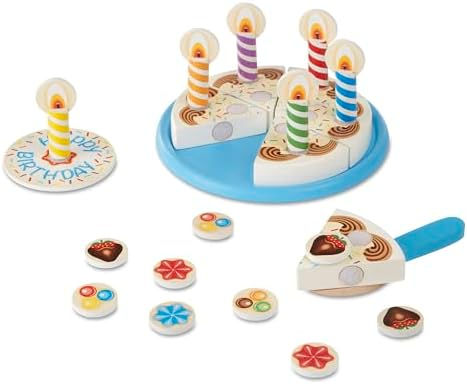
As play develops, single symbolic actions gradually turn into longer, more organized sequences of realistic events, such as placing food in a bowl, stirring it, and feeding themselves or others. A child might pretend to bake a cake, frost it, cut it, serve it, and then share it with others, demonstrating increasing planning, sequencing, and problem-solving skills.
Over time, play also becomes more abstract and imaginative, with objects symbolizing something entirely different within play. For example, blocks may be stacked to represent a bridge or a house, or a block may be used as pretend food for a doll. As children’s play continues to evolve, they may begin to recreate events they have experienced or observed in daily life, or invent new scenarios altogether. This type of dramatic play, typically seen in three- to five-year-olds, supports creativity, prediction, social understanding, and problem-solving - and continues to grow in complexity over time.
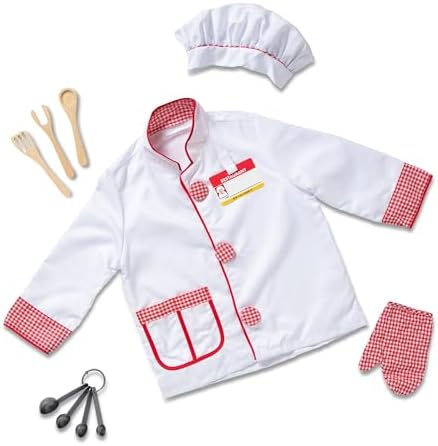
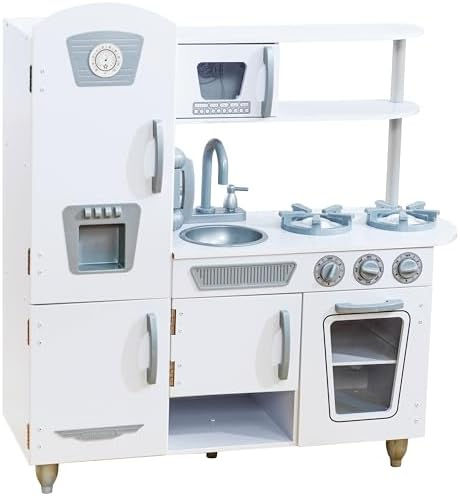
Examples of toys that often support Dramatic Play include play kitchens, pretend food, dolls, pretend telephones, and dress-up kits.
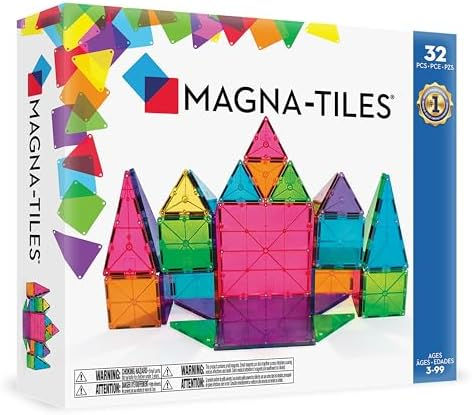
Examples of toys that often support Constructional Play include blocks, play dough, slime, and magnetic tiles.

Game Play
During this type of play, children work together to engage in shared games or play schemes that rely on rules, logic, and communication. Game play most commonly emerges during the school-age years and continues to develop into adolescence and adulthood. This form of play requires children to communicate ideas, create and negotiate rules, and problem-solve together.
As children engage in cooperative play, they may assign roles, take turns, and adjust their behavior based on others’ perspectives—skills that rely on perspective taking and theory of mind. In this stage, children are not only interested in the activity itself, but also attentive to the thoughts, actions, and responses of the other players. Cooperative play often builds on earlier types of play and can be combined with functional, symbolic, and dramatic play as children’s skills and interests continue to evolve.
Examples of toys that often support this kind of play include board games, card games, a kitchen set, and dress up kits.


Types of Social Play
As children engage with others during play, they develop essential language, communication, and cognitive skills that support increasingly complex play experiences. Social play can be described by how a child interacts with peers during play, and these stages often overlap and build on one another.
Common types of social play include:
Solitary Play
The child plays independently with minimal attention to others nearby.
Onlooker Play
The child observes other children playing without attempting to join in.
Parallel Play
Children play alongside one another with limited interaction. They may engage in similar activities and show interest in what others are doing, without direct engagement.
Associative Play
Children begin interacting with one another while engaged in the same activity. Although they may share materials or ideas, play is not yet organized by shared rules or complex planning.
Cooperative Play
Children work together toward a shared goal, communicating ideas, creating rules, and assigning roles within a play scheme.
It’s important to note that these types of social play are not rigid stages or milestones that all children move through in the same way. Children may move between different types of play depending on the environment, activity, energy level, or social comfort. Some children may prefer solitary or parallel play, while others seek out cooperative play—and all of these styles are valid. Play looks different for everyone, and meaningful play does not have to fit a single “expected” pattern to be valuable.
Want to explore the toys and materials (and more!) mentioned throughout this post? To make browsing easy for families, we've linked them in our BAC Amazon storefront.
**As an Amazon Associate, the BAC may earn a small commission from qualifying purchases.
Resources
Westby, Carol. (1980). Assessment of cognitive and language abilities through play. Language Speech and Hearing in Schools. Vol 11(3). Pages 154-168
Cohen, Emily (2019) The development of play. Playing With Purpose, SLP Basics. Retrieved from: www.tandemspeechtherapy.com
Kostelnik, Marjorie; Soderman, Anne & Phipps Whiren, Alice. (2011). Developmentally appropriate curriculum: best practices in early intervention 5. Upper Saddle River, NJ: Pearson 2011. Print.
Del Duca, Maria (2013). Welcome to Kid Confidential: Let’s Play. Leader Live: Speech-Language Pathology. Retrieved from: leader.pubs.asha.org


Comments